
Wind Direction in Bali — Trade Winds, Sea Breeze & Glass-Off
Why the morning is glassy, why noon is blown out, why sunset is the daily reset. Bali's wind cycle explained.
Every day in Bali, the same wind story unfolds. Once you understand it, you'll never plan a session at the wrong time again.
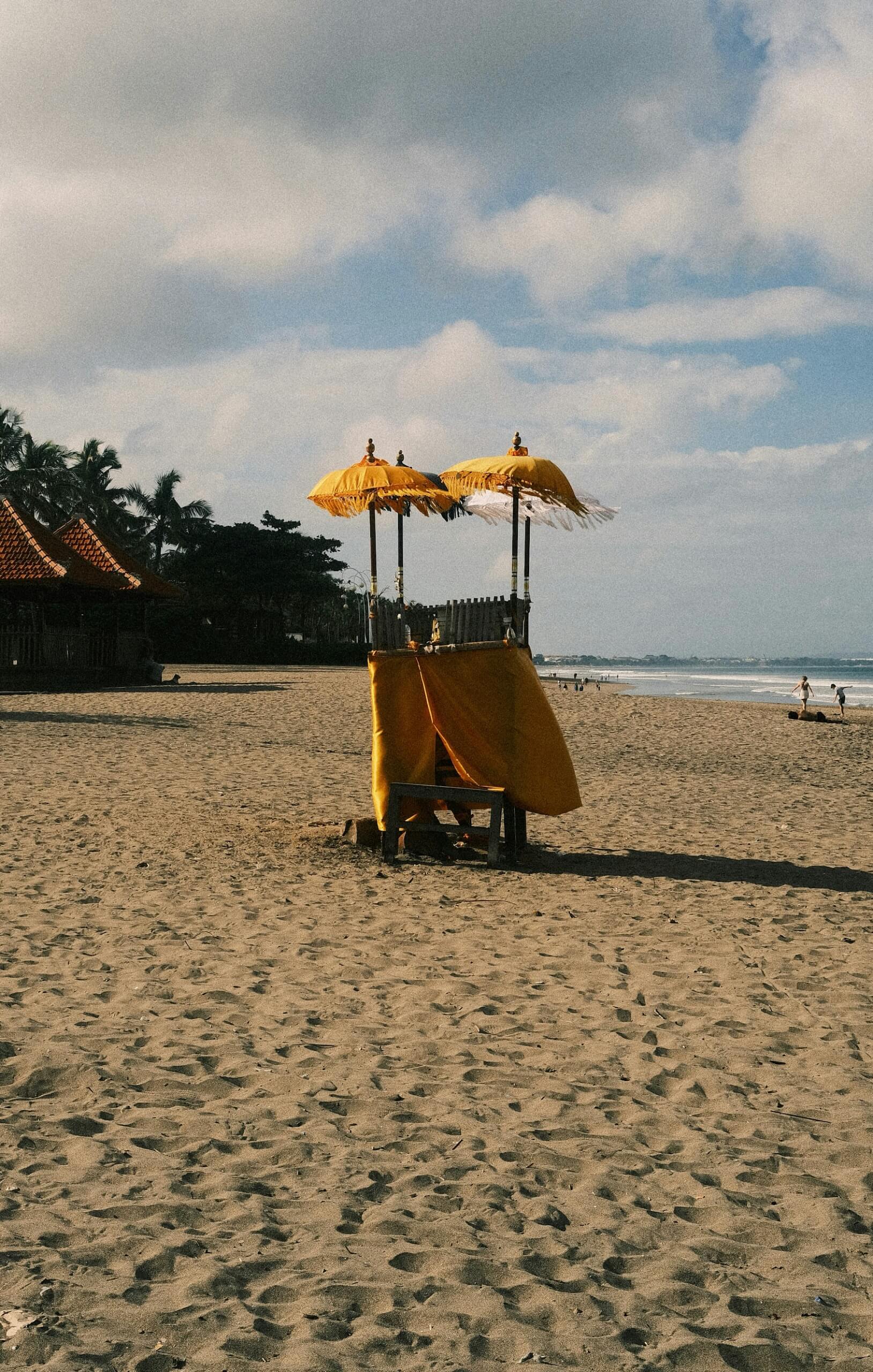
Dawn — glass
5:30-8:00 AM. Land has cooled overnight. No thermal differential. Surface is mirror-smooth. The 'magic hour' for any spot.
Late morning — onshore sea breeze
9:00-11:00 AM. Land heats up, hot air rises, cool sea air rushes in. West coast spots (Uluwatu/Canggu) get an onshore westerly breeze. Conditions deteriorate fast.
Afternoon — full onshore
11:00-15:00. The sea breeze is at full strength. Most west-coast spots are unsurfable. East-coast spots (Keramas, Sanur) might still be clean — they were getting offshore wind earlier.
Glass-off — sunset
16:30-18:30. Land starts cooling, thermal differential reverses. Wind drops to nothing. The west coast smooths out again — your second magic hour of the day.
Pro tip
Plan two short sessions per day (dawn + glass-off) instead of one long one at noon. You'll surf better waves, sunburn less, and have the day for everything else.
Trade-wind shifts by season
May-Oct: dominant SE-E trade winds = offshore for the Bukit. Nov-Mar: NW monsoon winds = offshore for the east coast (Keramas/Sanur prime time).
Frequently Asked Questions
→What time is the dawn glass-off window in Bali?
5:30-8:00 AM. The land has cooled overnight, no thermal differential, so the surface is mirror-smooth. By 8 AM the sea breeze starts and west-coast spots deteriorate fast. Plan dawn sessions for the magic 2.5-hour window.
→Why does the wind always go onshore at noon?
Land heats up 2-3× faster than ocean. Hot air rises, cool sea air rushes in to fill the void. That sea breeze blows onshore (from sea to land) and is what makes Canggu mid-day surfing brutal. It's pure thermodynamics — every tropical island works the same way.
→Is sunset glass-off as good as dawn?
Often better. The 16:30-18:30 window has lower swell variance (waves have stabilised through the day), warmer water still, and a magic golden-hour visual. The drawback is you're sharing it with everyone else who also figured this out — dawn is empty, sunset is busy.
Continue reading
 Wave theory
Paddle Technique for Bali — The 80/20 of Catching More Waves
The 5 paddling habits that separate the surfer who catches 8 waves a session from the one who catches 2. All learnable in a week.
 Wave theory
Reading Bali Tide Charts — The 4-Variable Surf Forecast
Why two surfers checking the same forecast end up at completely different spots — and how to actually read tide × swell × wind × period.
 Wave theory
Reef Break vs Beach Break — Why the Same Wave Breaks Differently
Reef, sand, point, slab — what each break shape does to a wave, and which Bali spot teaches you the most for your skill level.